Science


Our Aim
Science is the systematic study of the world around us where curious minds ask questions, discover new ideas, investigate possibilities and use evidence to explain how things work. At Wath Central, our Science Curriculum is designed to promote children’s curiosity and fascination in a range of topics. Based on a number of our ‘Big Ideas’, children explore and investigate principles of biology, chemistry and physics.
Throughout all of our topics, children develop a sense of the importance of science, carry out investigative enquiries and learn how to work scientifically. By teaching children to confidently apply scientific skills, communicate their findings and form their own conclusions, we aim to inspire the future generations of biologists, chemists and physicians.
Our Strategy
Using the theory and pedagogy of the CUSP curriculum, we teach the primary science curriculum through the expert delivery of substantive and disciplinary knowledge. Our curriculum is built on sequenced learning modules that have a knowledge-focused design and build on prior knowledge through cumulative learning.
Topics are delivered through engaging, memorable and relevant lessons which extend into other areas of the curriculum. Opportunities for children to question, explore and deepen the skills they have learnt are provided through trips, visitors and investigations.
Our teaching and learning model ensures that children have the opportunity to try new skills with careful guidance before attempting to apply them independently.
Lessons are carefully adapted for different groups of children to ensure every child can access the content, make progress and achieve to their full potential.
Curriculum Design
Using the theory and pedagogy of the CUSP curriculum, we teach and assess the science curriculum through the expert delivery of substantive and disciplinary knowledge.
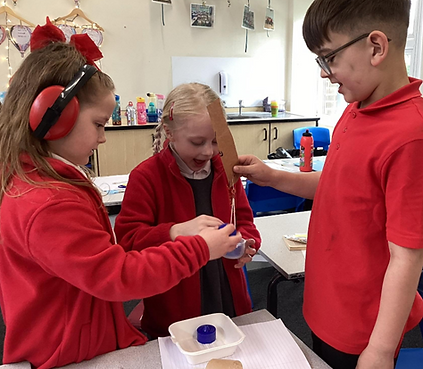
Our curriculum is built on sequenced learning modules that have a knowledge-focused design, build on prior learning through cumulative learning and provide regular assessment opportunities. Key skills and knowledge are assessed through our ‘thinking -hard’ tasks where children apply the new skills they have acquired. Topics are delivered through memorable, engaging and enquiry-based lessons that include opportunities for children to demonstrate their new skills through investigations, experiments and open-ended challenges.
Our curriculum is delivered through the explicit teaching of two strands. These are then woven together throughout a learning journey.
Substantive Knowledge
This is the subject knowledge and vocabulary required to understand the science curriculum and includes:
Disciplinary Knowledge
This is how the children use the knowledge they have obtained to become more of an expert and to start thinking scientifically. This is knowing how to collect, use, interpret, understand and evaluate evidence from scientific processes.
These skills are explicitly taught throughout our topics. Children build their understanding by applying substantive knowledge to questioning and planning, observing, performing a range of tests, accurately measuring, comparing, classifying and gathering data to help answer questions. Children learn how to make predictions, improve investigations, seek patterns and make conclusions.
These skills are developing children’s ability to ‘Work Scientifically’. They are mapped and assessed across our curriculum using the following criteria
-
Identifying and Classifying
-
Pattern Seeking
-
Research
-
Observing Over Time
-
Fair and Comparative Testing.
In addition to this content, we also value the study of scientists from the past as well as promoting diverse, present-day role models in the field.
The documents below show the above strands broken down and the progression of the subject across our year groups.
If you have any questions regarding our science curriculum, please don’t hesitate to contact us.